
Akemi Inoue, Toshihide Matsumoto, Yuka Ito, Zehao Jiang, †Hiroyuki Takahashi*
Cite
Inoue A, Matsumoto T, Ito Y, Jiang Z, Takahashi H. Associations between preoperative fibrinogen levels and clinicopathological factors in oral squamous cell carcinoma: A meta-analysis. Lab Med Int 2024; 3(3): 61-65. doi: 10.51041/lmi.3.3_61
Review
Lab Med Int 2024; 3(3): 61-65
†Correspondence: Kitasato University School of Allied Health Sciences, 1-15-1 Kitazato Minimi-ku, Sagamihara, Kanagawa 252-0373, Japan
E-mail: hitakaha”@”med.kitasato-u.ac.jp
Received October 12, 2023; accepted July 1, 2024
Kitasato University, School of Allied Health Sciences
ABSTRACT
Objectives: There is a lack of consensus among researchers regarding the relationship between preoperative fibrinogen levels and clinicopathological factors in oral squamous cell carcinoma (OSCC). The aim of this meta-analysis was to evaluate and clarify these associations in OSCC.
Methods: The PubMed, Web of Science, and Embase databases were examined for studies that evaluated the relationships between preoperative fibrinogen level and clinicopathological factors until October 12, 2023.
Results: Three studies comprising a total of 509 patients were included in the analysis. No correlations between preoperative fibrinogen levels and gender (odds ratio [OR], 0.93; 95% confidence interval [CI], 0.34–2.55; I2=78%; p=0.89), the pT category (OR, 2.52; 95% CI, 0.75–8.46; I2=81%; p=0.13), lymph node metastasis (OR, 0.75; 95% CI, 0.37–1.51; I2=52%; p=0.41), and TNM stage (OR,1.59; 95% CI, 0.64-3.93; I2=73%; p=0.32) were observed in the meta-analysis. However, the heterogeneity was found to be high or very high. The influence of publication bias was considered in this analysis.
Conclusion: Preoperative fibrinogen levels were not related to gender, the pT category, lymph node metastasis, or TNM stage in OSCC. The lack of sufficient data may render the data integration unreliable. Therefore, additional studies with larger sample sizes and similar cut-off values are required to validate the findings of this study.
〔Lab Med Int 2024; 3(3): 61-65〕
Key Words
Oral squamous cell carcinoma, fibrinogen, clinicopathological parameters, meta-analysis
I.Introduction
In Japan, oral cancer accounts for almost 1% of all cancers 1) and an increasing number of cancer-related deaths 2). Oral squamous cell carcinoma (OSCC) is the most common type of oral cancer, and surgical resection is the most common treatment for this disease. Patients with advanced cancer have a significantly worse quality of life than those with early cancer 3).
Several methods, including assessments of the preoperative fibrinogen level, have been tested for the early detection and prognostic prediction of oral cancer 4)–6). There is a lack of consensus among studies on the relationship between preoperative fibrinogen levels and clinicopathological factors in OSCC. Therefore, this study meta-analysis was conducted to evaluate and clarify the aforementioned associations in OSCC.
II.Materials and methods
Search strategy
This meta-analysis was performed in accordance with the 2020 Preferred Reporting Items for Systematic Reviews and Meta-analyses Statement 7). The PubMed, Web of Science, and Embase databases were searched to identify articles on the relationship between preoperative fibrinogen levels and clinicopathological factors in OSCC, published until August 3, 2023. The following search keywords were used: “oral squamous cell carcinoma” [AND] “fibrinogen.” We searched all fields in the literature. Additionally, the reference lists of the included papers were examined. Studies published in languages other than Japanese or English, those that used cultured cells or animal experiments, case reports, and articles lacking data on the relationships between clinicopathological factors and preoperative fibrinogen level were excluded from this study.
Statistical analysis
Statistical analysis was performed using Review Manager 5.4 (Cochrane Collaboration, Oxford, UK) to combine the data and the effect estimate. A random effects model was used due to the presumed population differences among the included studies. The effect estimates are presented with their 95% confidence intervals (CIs). The intervention effects were measured using odds ratios (ORs), and the heterogeneity among studies was calculated using the I2 values. Publication bias was assessed using funnel plots for the primary endpoint.
III.Results
Study selection
A total of 50, 24, and 69 studies were identified from the PubMed, Web of Science, and Embase databases (Figure 1). In the primary screening, the titles and abstracts were examined to exclude review articles, studies with inappropriate research designs, non-human studies, and those published in languages other than Japanese and English. Of the five studies remaining after primary screening, two were excluded due to cases of advanced cancer or treatment by neoadjuvant chemoradiation. Finally, three articles with a total of 509 patients were included in the analysis (Table 1). Relationships between clinicopathological factors and preoperative fibrinogen levels.
The preoperative fibrinogen levels were not associated with gender (OR, 0.93; 95% CI, 0.34–2.55; I2=78%; p= 0.89; Figure 2A), the pT category (OR, 2.52; 95% CI, 0.75–8.46; I2=81%; p=0.13; Figure 2B), which indicates the size or local extent of the primary tumor, lymph node metastasis (OR, 0.75; 95% CI, 0.37–1.51; I2=52%; p=0.41; Figure 2C), and TNM stage (OR, 1.59; 95% CI, 0.64–3.93; I2=73%; p=0.32; Figure 2D). Associations between fibrinogen levels and other clinicopathological factors, such as age and tumor differentiation, could not be analyzed due to a lack of data. The heterogeneity, demonstrated by the I2 values, was high or very high. The funnel plots for gender, the pT category, lymph node metastasis, and TMN stage demonstrated asymmetry, suggesting the possibility of publication bias (Figure 3).
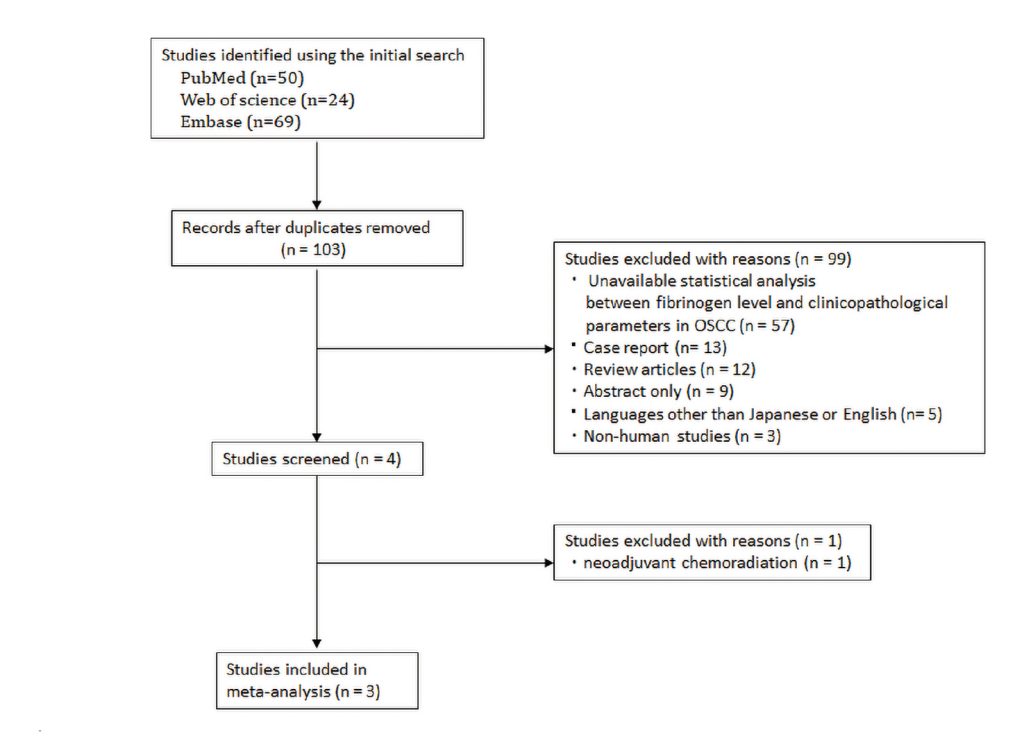
Figure 1 Flow chart for the selection of studies in this meta-analysis. OSCC, oral squamous cell carcinoma.
Table 1 Characteristics of the studies included in this meta-analysis.
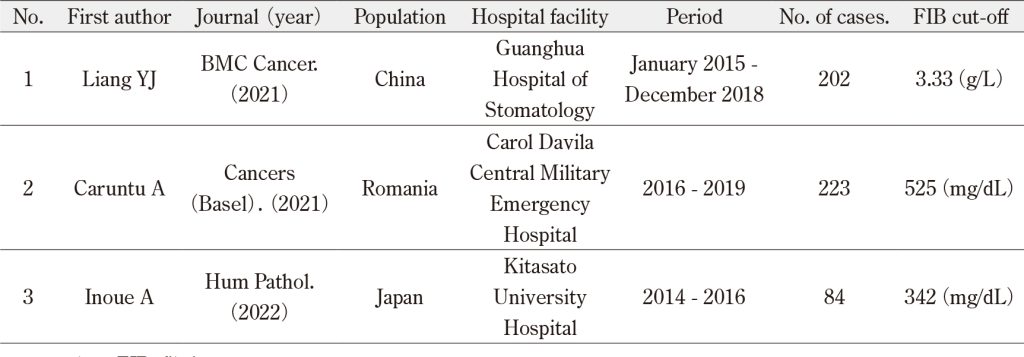
no., number; FIB, fibrinogen.
IV.Discussion
Fibrinogen is a blood coagulation factor produced in the liver; it is converted into fibrin by thrombin to form fibers and strong fibrin clots 8)9). The expression of this classic acute phase reactant is considerably increased in the liver and blood during inflammatory conditions 10). In addition, hyperfibrinogenemia and a cancer-associated systemic inflammatory response are strongly associated with cancer progression and prognosis 11). A meta-analysis of 17 studies revealed that higher pretreatment plasma fibrinogen levels predicted poor overall survival (OS) and disease- or progression-free survival in patients with lung cancer 12). In a recent study, preoperative fibrinogen levels in colorectal cancer were correlated with several clinicopathological factors, including age, tumor differentiation status, tumor location, pT category, and TNM stage; moreover, an elevated fibrinogen level was independently correlated with poor OS and cancer-specific survival 13). However, no clear conclusions regarding the relationship between preoperative fibrinogen values and clinicopathological factors in OSCC have been reached.
In the current study, the preoperative fibrinogen levels were not associated with the clinicopathological features of OSCC. Inoue et al. and Caruntu et al. reported high preoperative fibrinogen levels and the pT category in OSCC 5)6). High preoperative fibrinogen levels were detected in many patients with advanced TNM stages in the studies by Liang et al.; additionally, several cases of lymph node metastasis due to the high preoperative fibrinogen levels were reported 4). Furthermore, according to Liang et al. 4), high levels of preoperative fibrinogen were more common in men, but no significant difference based on sex was observed in the studies by Inoue et al. and Caruntu et al. 5)6). Despite the concordant and inconsistent reports on the relationship between preoperative fibrinogen levels and clinicopathological factors, the I2 statistics in all studies showed high or very high heterogeneity in OSCC.
One of the limitations of the current meta-analysis was the difference in the cut-off values that separated the high and low fibrinogen values in each study. Moreover, the number of articles included in this meta-analysis was low, resulting in high heterogeneity and publication bias. Nevertheless, our results indicate that preoperative fibrinogen measurement may not be useful in determining the treatment strategy. Additional studies using similar cut-off values and larger sample sizes are necessary to validate the findings of this study.
Abnormalities in the blood coagulation and fibrinolysis system are frequently observed in patients with malignant tumors, and these abnormalities are linked to the progression of DIC and thrombosis 14). In addition, the fibrinolysis system affects the growth and metastasis of malignant tumors 15). Several thrombin-related factors, such as plasminogen activator inhibitor-1 polymorphism 16), the low-production allele of the VEGF +936C/T polymorphism 17), coagulation factor XIII 18), and the 1040C/T polymorphism influencing thermal stability and activity of thrombin activatable fibrinolysis inhibitor 19), have been linked to oral carcinogenesis. As previously described, there are few reports on the relationships of the blood coagulation and fibrinolysis system with malignancy, including studies on fibrinogen in malignant tumors of the oral region.
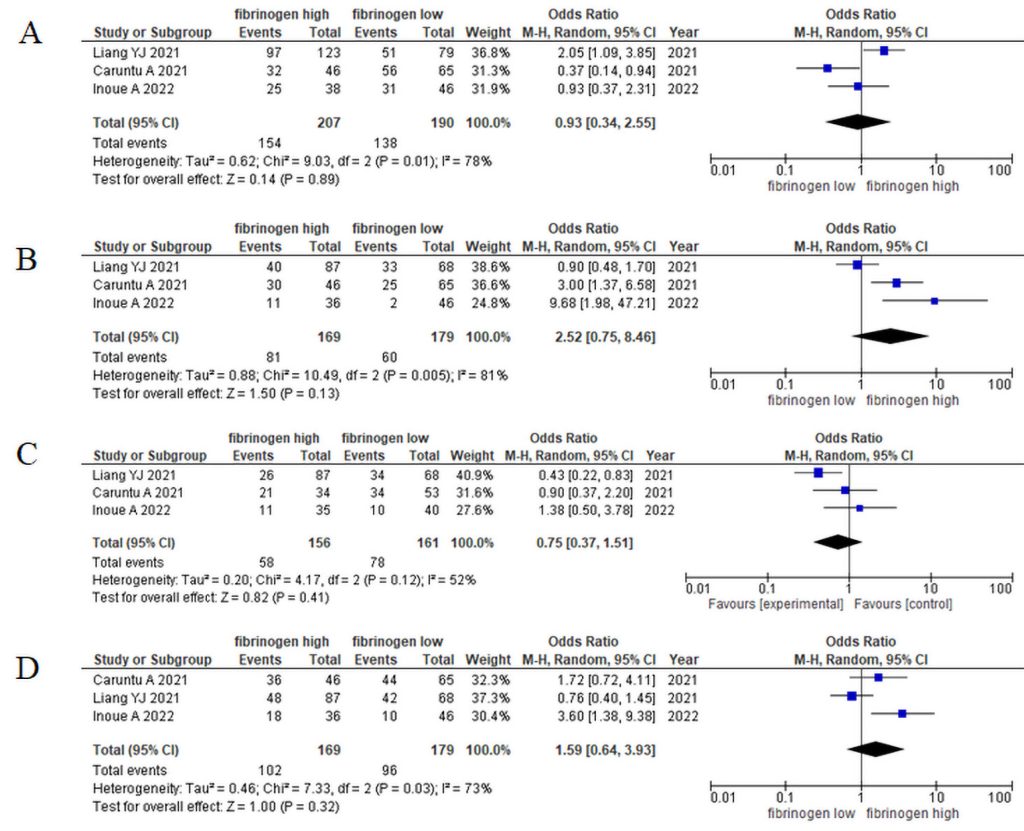
Figure 2 Meta-analysis for the fibrinogen level and clinicopathological parameters in OSCC. Forest plots showing the correlations between fibrinogen levels and gender (A), the pT category (B), lymph node metastasis (C), and TNM stage (D) in OSCC.
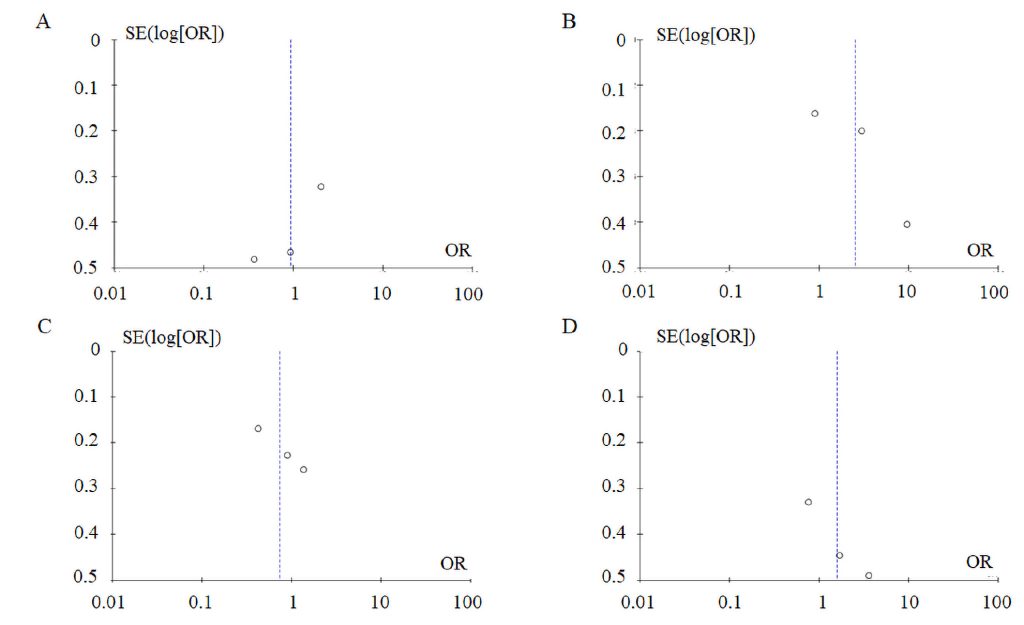
Figure 3 Funnel plots for the fibrinogen levels. (A) gender, (B) pathological pT category, (C) lymph node metastasis, and (D) TNM stage.
V.Conclusions
Despite the limitations of this study, no associations of fibrinogen levels with gender, the pT category, lymph node metastasis, or TNM stage were observed. Nonetheless, further studies on the blood coagulation and fibrinolysis system, including fibrinogen, are required to confirm these findings in OSCC.
Conflicts of interest: none.
Funding source: This research did not receive any specific grant from funding agencies in the public, commercial, or not-for-profit sectors.
References
- Japan Society of Clinical Oncology. Clinical Practice guideline(2019). Available from: http://www.jsco-cpg.jp/oral-cavity-cancer/guideline/#II (Accessed on: July 22, 2023).
- Almangush A, Mäkitie AA, Triantafyllou A, et al. Staging and grading of oral squamous cell carcinoma: An update. Oral Oncol 2020; 107: 104799. doi: 10.1016/j.oraloncology.2020.104799.PubMed
- Bschorer M, Schneider D, Goppold K, et al. Quality of life and survival rate after primary surgical treatment of oral squamous cell carcinoma: A retrospective study with 18 years of follow-up. J Craniomaxillofac Surg 2022; 50(2): 170–7. doi: 10.1016/j.jcms.2021.09.016.PubMed
- Liang YJ, Mei XY, Zeng B, et al. Prognostic role of preoperative D-dimer, fibrinogen and platelet levels in patients with oral squamous cell carcinoma. BMC Cancer 2021; 21(1): 122. doi: 10.1186/s12885-021-07841-5.PubMed
- Inoue A, Matsumoto T, Ito Y, et al. TP53 positivity combined with high fibrinogen expression defines a subtype of oral squamous cell carcinoma with an unfavorable prognosis. Hum Pathol 2022: 130: 25-35. doi: 10.1016/j.humpath.2022.10.008.PubMed
- Caruntu A, Moraru L, Lupu M, et al. The Hidden Treasures of Preoperative Blood Assessment in Oral Cancer: A Potential Source of Biomarkers. Cancers (Basel) 2021; 13(17): 4475. doi: 10.3390/cancers13174475.PubMed
- Page MJ, McKenzie JE, Bossuyt PM, et al. The PRISMA 2020 statement: An updated guideline for reporting systematic reviews. BMJ 2021; 372: n71. doi: 10.1136/bmj.n71.PubMed
- Zhang X, Long Q. Elevated serum plasma fibrinogen is associated with advanced tumor stage and poor survival in hepatocellular carcinoma patients. Medicine(Baltimore) 2017; 96(17): e6694. doi: 10.1097/MD.0000000000006694.PubMed
- Levy JH, Welsby I, Goodnough LT. Fibrinogen as a therapeutic target for bleeding: a review of critical levels and replacement therapy. Transfusion 2014; 54(5): 1389-405. doi: 10.1111/trf.12431.PubMed
- Castell JV, Gómez-Lechón MJ, David M, et al. Interleukin-6 is the major regulator of acute phase protein synthesis in adult human hepatocytes. FEBS Lett 1989; 242(2): 237–9. doi: 10.1016/0014-5793(89)80476-4.PubMed
- Wang PX, Wang HJ, Liu JH, et al. A nomogram combining plasma fibrinogen and systemic immune-inflammation index predicts survival in patients with resectable gastric cancer. Sci Rep 2021; 11(1): 10301. doi: 10.1038/s41598-021-89648-9.PubMed
- Zhang Y, Cao J, Deng Y, et al. Pretreatment plasma fibrinogen level as a prognostic biomarker for patients with lung cancer. Clinics(Sao Paulo) 2020; 75: e993. doi: 10.6061/clinics/2020/e993.PubMed
- Sun Y, Han W, Song Y, et al. Prognostic value of preoperative fibrinogen for predicting clinical outcome in patients with nonmetastatic colorectal cancer. Cancer Manag Res 2020; 12: 13301-9.PubMed
- Zacharski LR, Wojtukiewicz MZ, Costantini V, et al. Pathways of coagulation/fibrinolysis activation in malignancy.Semin Thromb Hemost 1992; 18(1): 104-16. doi: 10.1055/s-2007-1002415.PubMed
- Lindahl AK, Odegaard OR, Sandset PM, et. al. Coagulation inhibition and activation in pancreatic cancer. Changes during progress of disease. Cancer 1992; 70(8): 2067-72. doi: 10.1002/1097-0142(19921015)70:8<2067::aid-cncr2820700809>3.0.co;2-a.PubMed
- Vairaktaris E, Yapijakis C, Serefoglou Z, et al. Plasminogen activator inhibitor-1 polymorphism is associated with increased risk for oral cancer. Oral Oncol 2006; 42(9): 888-92. doi: 10.1016/j.oraloncology.2005.12.005.PubMed
- Yapijakis C, Vairaktaris E, Vassiliou S, et al. The low VEGF production allele of the +936C/T polymorphism is strongly associated with increased risk for oral cancer. J Cancer Res Clin Oncol 2007; 133(10): 787-91. doi: 10.1007/s00432-007-0240-y.PubMed
- Vairaktaris E, Vassiliou S, Yapijakis C, et al. Increased risk for oral cancer is associated with coagulation factor XIII but not with factor XII. Oncol Rep 2007;18(6): 1537-43.PubMed
- Vairaktaris E, Yapijakis C, Nkenke E, et al. The 1040C/T polymorphism influencing thermal stability and activity of thrombin activatable fibrinolysis inhibitor is associated with risk for oral cancer. Am J Hematol 2007; 82(11): 1010-2.PubMed