Marina Mikami*1, Sakyo Kongo*1, Rie Aoki*1, Atsuko Kawai*2, Daisuke Nishizawa*3, Kazutaka Ikeda*3, Nagatani (Numajiri) Maki*4, Teruko Honda*5, †Yuya Onozawa*4, Kazuhiko Iwahashi*1,4,6
†Corresponding author: Azabu University, 1-17-71, Fuchinobe, Chuo-ku, Sagamihara-shi, Kanagawa 252-5201, Japan.
Tel: 042-754-7111 (2353) Fax: 042-754-7661 e-mail: y-onozawa”@”azabu-u.ac.jp
Received May 6, 2022; accepted March 16, 2023
*1 Laboratory of Physiology (Project of Neurophysiology), Course of Environmental Health Science, Graduate School of
Environmental Health, Azabu University, 1-17-71, Fuchinobe, Chuo-ku, Sagamihara-shi, Kanagawa 252-5201, Japan.
*2Koutokukai Total Health Clinic, Yamagata, Japan.
*3 Addictive Substance Project, Tokyo Metropolitan Institute of Medical Science, 2-1-6, Kamikitazawa, Setagaya-ku, Tokyo 156-
8506, Japan.
*4 Laboratory of Physiology, Azabu University, 1-17-71, Fuchinobe, Chuo-ku, Sagamihara-shi, Kanagawa 252-5201, Japan.
*5 Laboratory of Hematology, Azabu University, 1-17-71, Fuchinobe, Chuo-ku, Sagamihara-shi, Kanagawa 252-5201, Japan.
*6Health Administration Center, Azabu University, 1-17-71, Fuchinobe, Chuo-ku, Sagamihara-shi, Kanagawa 252-5201, Japan.
Cite
Mikami M, Kongo S, Aoki R, Kawai A, Nishizawa D, Ikeda K, Nagatani (Numajiri) M, Honda T, Onozawa Y, Iwahashi K. Association between delta opioid receptor gene polymorphisms and alcohol dependence in a Japanese archipelago population. Lab Med Int 2023; 2(2): 25-29. doi: 10.51041/lmi.2.2_25
Original
Lab Med Int 2023; 2(2): 25-29
ABSTRACT
Alcohol dependence (AD) is known to be a gene-related disease.
There are three types of opioid receptors, μ (mu), δ (delta), and κ (kappa). All three are thought to be associated with AD. The delta opioid receptors are associated with alcohol mediated processes in the brain.
In this study, we focused on the several known OPRD1 (opioid receptor delta 1) gene polymorphisms that have not yet been the target of AD-related studies in a Japanese population, and that we can examine by the polymerase chain reaction-restriction fragment length polymorphism (PCR-RFLP) method. we examined whether OPRD1 gene polymorphisms (rs678849 and rs2234918) affected alcohol dependence development in 64 patients and 75 healthy people as controls. We also focused on an ALDH2 gene polymorphism (rs671) as to restriction constitution. This analysis was also performed for the group with ALDH2*1/*1.
There were significant differences in carriers (major allele homozygous carriers versus minor allele carriers) of rs678849 between AD patients and controls (p=0.029), and also in the group with ALDH2*1/*1 (p=0.0285). However, the significant differences were lost on the Bonferroni correction. There were no significant differences in rs2234918 between AD patients and controls. The haplotype analysis revealed there were no significant differences between AD and controls for the four haplotypes. On LD analysis, D’ and r 2 were both found to be low (D’=0.31, r 2=0.022).
We concluded that the OPRD1 gene polymorphisms rs678849 and rs2234918 might not be associated with alcohol dependence in a Japanese population. It is still necessary to analyze the opioid receptor gene in a larger sample size than that in this study.
〔Lab Med Int 2023; 2(2): 25-29〕
Key Words
delta opioid receptor, polymorphism, haplotype, linkage disequilibrium, alcohol dependence
I. Introduction
Alcohol dependence (AD) is known to be a gene-related disease.
There are three types of opioid receptors, μ (mu), δ (delta) and κ (kappa). The δ opioid receptors are associated with alcohol-mediated processes in the brain 1). The previous study showed that the density of δ opioid receptors was significantly higher in the ventral tegmental area and nucleus accumbens of high alcohol preference mice 2). These brain areas are related to the reward system. Furthermore, μ and δ opioid receptor antagonists reduce alcohol craving and consumption 3)-6). Thus, δ opioid receptors might be related to AD. δ opioid receptors are coded by the OPRD1 (opioid receptor delta 1) gene, which is located at 1p36.1-p34.3 3), spanning approximately 60 kb 7), and consisting of 3 exons 8).
In this study, we focused on the several known OPRD1 gene polymorphisms that have not yet been the target of AD-related studies in a Japanese population, and that we can examine by the polymerase chain reaction-restriction fragment length polymorphism (PCR-RFLP) method. We investigated whether the OPRD1 gene polymorphisms rs678849 and rs2234918 are susceptibility factors for AD. rs678849 and rs2234918 are located in intron 1 and exon 3 on the OPRD1 gene 3), as shown in Figure 1. In addition, the previous study revealed that rs678849 was significantly associated with regional frontal, temporal, and occipital brain volume 9). rs678849 minor allele carriers had lower brain tissue volumes around the brain regions mentioned above in both the elderly group and the young healthy group 9). rs2234918 (Gly307Gly) is a silent (synonymous) mutation would not change the composition of the proteins encoded by genes 3)10). It was reported that the silent SNP of the other gene is related to AD (p = 0.003)11). These SNPs are in dbSNP database (https://www.ncbi.nlm.nih.gov/snp/)19)20).
The ALDH2 gene polymorphism (rs671:1510G/A) 1510G allele was significantly associated with AD in a Japanese population 12). 1510A allele carriers (1510G/A and 1510A/A) are flushers who experience reactions such as nausea, palpitations, and headaches caused by drinking of a small amount of alcohol. Accordingly, we also performed analysis limited to the 1510G/G (ALDH2*1/*1) carriers among the subjects to focus on the restriction constitution.
II. Material and Methods
1. Subjects
This study was approved by the Ethics Committee of Azabu University, Japan (2359). Written informed consent was obtained from the 64 AD patients (57 males; 7 females) diagnosed according to DSM-IV diagnostic criteria and 75 healthy people (23 males; 52 females) as controls.
2. DNA Analysis
The two OPRD1 gene polymorphisms were examined by means of PCR-RFLP according to the methods of Zhang et al. (2008)3) and Gelernter and Kranzler. (2000)13) The ALDH2 gene polymorphism was examined by the method of Wu et al. (2005)14). The PCR conditions for the T100 Thermal Cycler (Bio-Rad Laboratories, Inc. Hercules, CA) were as follows: rs678849 (Initial denaturation for 5 min at 95℃, followed by 35 cycles of denaturation for 30 s at 95℃, annealing for 30 s at 53℃, and extension for 30 s at 72℃, followed by final extension for 5 min at 72℃); rs2234918 (As for rs678849 except for the annealing temperature, 65℃); and rs671 (Initial denaturation for 10 min at 95℃, followed by 35 cycles of denaturation for 30 s at 95℃, annealing for 30 s at 60℃, and extension for 30 s at 72℃, followed by final extension for 7 min at 72℃). The PCR products were digested with RsaⅠ (Nippongene, Tokyo, Japan), AluI (Takara, Shiga, Japan) or MboⅡ (New England Biolabs, Tokyo, Japan). The digested products were subjected to electrophoresis on agarose gels using the ethidium bromide staining method, as shown in Figure 2.
3. Statistical Analyses
The Hardy-Weinberg disequilibrium was assessed using a chi-square test. We compared the OPRD1 genotypes, alleles, and carriers (minor allele carriers versus major allele homozygotes carriers) between AD patients and controls by performing statistical analysis using a chi-square test with Yate’s correction. These statistical analyses were performed using ystat2018 15). Haplotype frequencies and linkage disequilibrium (LD) coefficients were calculated with gPLINK v. 2.050 (http://zzz.bwh.harvard.edu/plink/index.shtml) as described by Purcell S et al. (2007) 16), and Haploview v.4.2 (http://www.broad.mit.edu/mpg/haploview/index.php)17). A p-value less than 0.05 was considered statistically significant in this study. The Bonferroni correction was applied to correct for multiple comparisons, the p-value was adjusted.
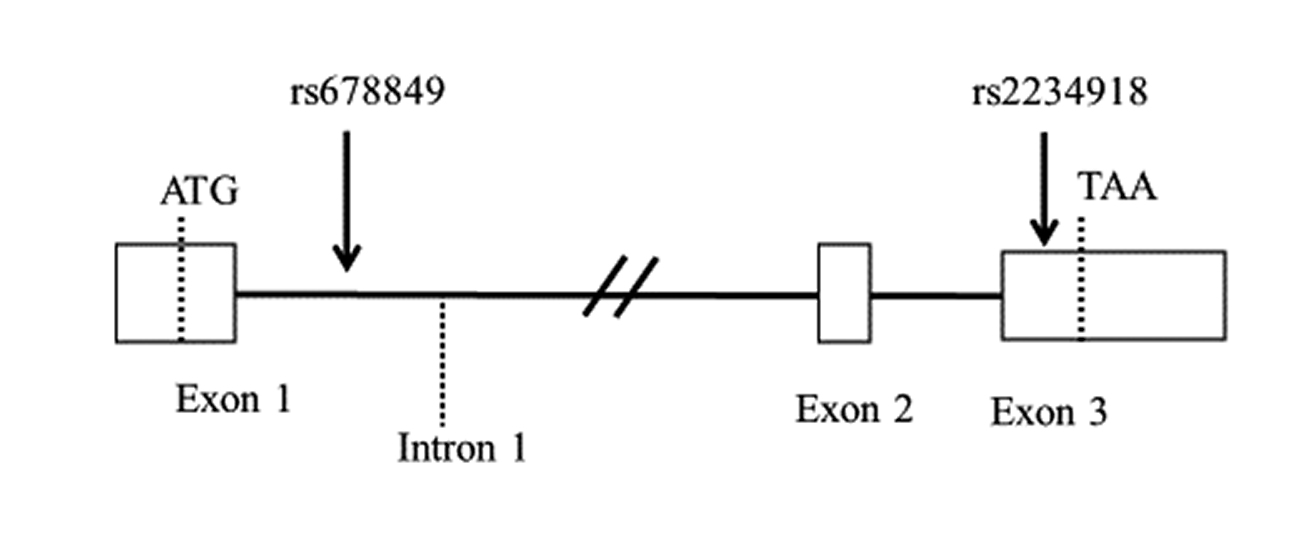
Figure 1 Polymorphism positions in the OPRD1 gene.
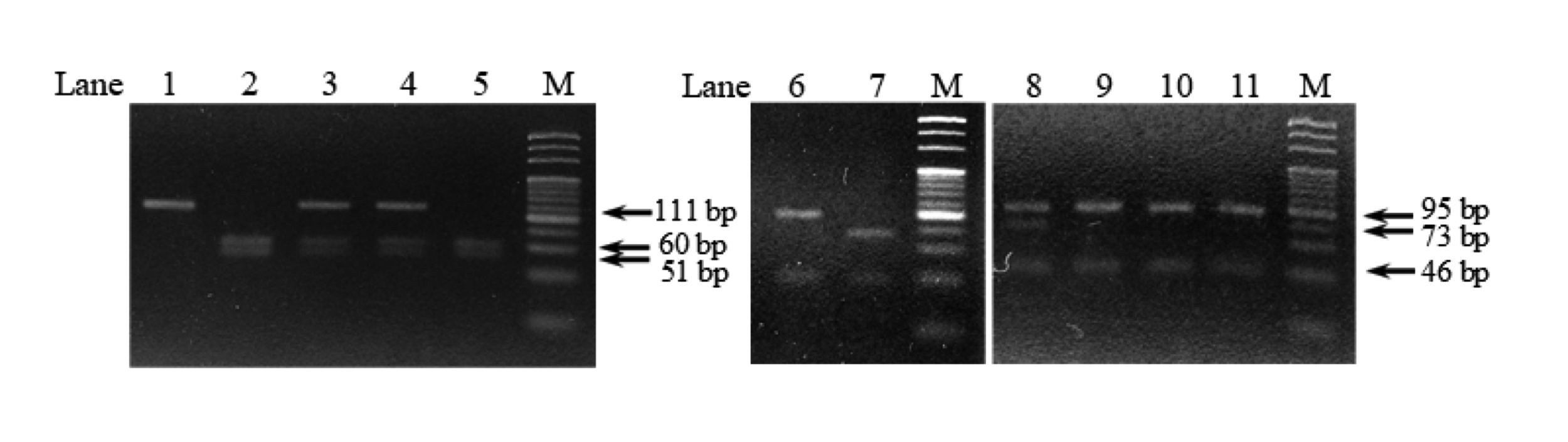
Figure 2 Ethidium bromide stained 4% agarose gel illustrating the Rsa I or the Alu I restriction fragments
of OPRD1 gene polymprphism rs678849 or rs2234918. rs678849: Lane M, 20 bp DNA Ladder; Lane1, C/C
eggnotype; Lane 2 and 5, T/T genotype; Lane 3 and 4, T/C genotype. rs2234918: Lane M, 20 bp DNA ladder;
Lane 6,9,10 and 11, T/T genotype; Lane 7, C/C genotype, Lane 8, T/C genotype. (22 bp was not visible.)
III. Results
Table 1 shows that the two OPRD1 gene genotype, allele, and carrier (minor allele carriers versus major allele homozygotes carriers) frequencies in AD patients and controls. The genotypes frequencies were as follows: rs678849 (Alcohol + Control; T/T: 16 + 32, T/C: 38 + 31, C/C: 10 + 12); and rs2234918 (T/T: 50 + 55, T/C: 13 + 18, C/C: 1 + 2). The genotype distribution was in Hardy-Weinberg equilibrium (data not shown). Although no significant differences in the genotype and allele frequencies of rs678849 were found (genotypes: χ2(2) = 5.389, p = 0.0676; alleles: χ2(1) = 2.140, p = 0.144), there was significant difference in the carrier (major allele homozygous carriers versus minor allele carriers) frequency between AD patients and controls (carriers (T/C + C/C vs T/T): χ2(1) = 4.767, p = 0.029). However, the significant difference was lost on the Bonferroni correction (The Bonferroni p-value was adjusted 0.05/2 = 0.025). There were no significant differences for rs2234918 (genotypes: χ2(2) = 0.148, p =0.929; alleles: χ2(1) = 0.520, p = 0.471; carriers (T/C + C/C vs T/T): χ2(1) = 0.429, p = 0.512). In addition, we also compared ALDH2*1/*1 carriers between AD patients and controls. Table 2 shows there were also significant differences in rs678849 carrier frequency in ALDH2*1/*1 carriers between AD patients and controls (carriers (T/C + C/C vs T/T) χ2(1) = 6.644, p = 0.0285). However, the significant difference was lost on the Bonferroni correction. There were no significant differences in the genotype and allele frequencies of rs678849 and rs2234918 (rs678849-genotypes: χ2(2) = 4.087, p = 0.130; alleles: χ2(1) = 2.61, p = 0.106; rs2234918-genotypes: χ2(2) = 0.493, p = 0.782; alleles: χ2(1) = 0.255, p = 0.614; carriers (T/C + C/C vs T/T): χ2(1) = 0.561, p = 0.454). Haplotype analysis revealed there were no significant differences between AD patients and controls for the four haplotypes, as shown in Table 3 (global p-value = 0.3586). On LD analysis, D’ and r 2 were both found to be low, as shown in Figure 3 (D’ = 0.31, r 2 = 0.022).
Table 1 Genotypes and frequencies of the polymorphisms of the OPRD1 gene in AD subjects and controls.
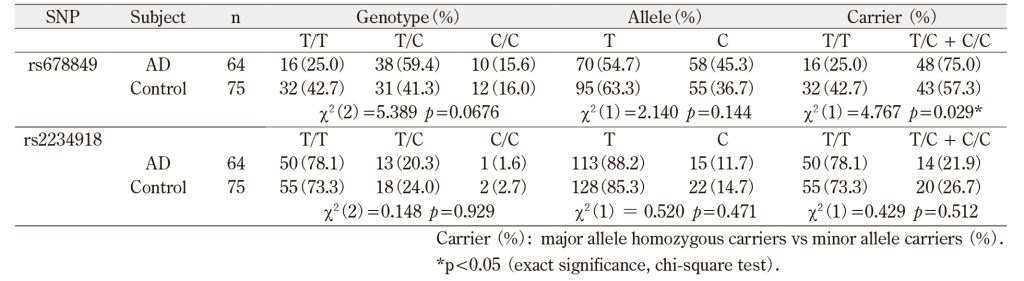
Table 2 Genotypes and frequencies of the polymorphisms of the OPRD1 gene
in AD subjects and controls in ALDH2*1/*1 carriers.
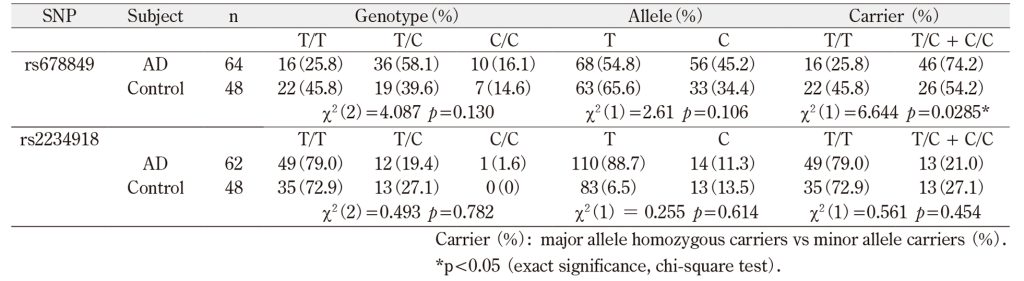
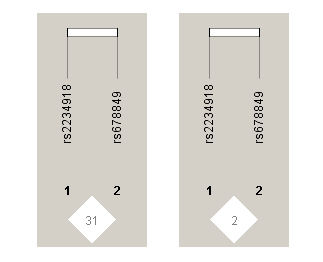
Figure 3 Linkage disequilibrium (LD) map of the OPRD1 locus examined in this study.
(a) D’ value = 0.31, (b) r 2 value = 0.022.
IV. Discussion
The results suggest that the OPRD1 gene polymorphism rs678849 and rs2234918 might not be associated with AD in a Japanese population in this study.
However, it might be some study limitations in this study.
Firstly, we should to consider statistics. The significant differences of rs678849 in carriers were lost on the Bonferroni correction. The Bonferroni correction can reduce the chance of a type I error but at the expense of a type Ⅱ error18). We might want to consider about a type Ⅱ error that produces a false negative.
Secondly, we should focus on subjects. Using a sample size larger than this subject might reveal the significant differences. As a side note, there were not found significant differences of allele frequency in both Asian population and this control subject. The T and C carriers of rs678849 were found 62.7% and 37.3% in 750 Asian population 19). The T and C carriers of rs2234918 were found 82.0% and 18.0% in 172 Asian population 20). Besides, the T and C carriers of rs678849 were found 63.3%and 36.7%, the T and C carriers of rs2234918 were found 85.3% and 14.7% in 75 Japanese control subjects.
In addition, the difference between AD patients and controls was expected to become further apparent by limiting examination to ALDH2*1/*1 (restricting constitution). The relationships were confirmed both in all subjects and in a group with ALDH2*1/*1 , there were not found significant differences of the results.
In the haplotype analysis results, there were no associations of the four haplotypes with each other. In the previous study on a European American population, there was significant association of the haplotype including rs2234918 with AD 3). Therefore, other SNPs also should be considered in AD-related studies like the previous study 3). Regarding the LD analysis, it is unlikely that there is an LD between rs678849 and rs2234918. However, this study does not cover all LD blocks 7).
V. Conclusion
There have been few reports of association studies between OPRD1 gene polymorphisms and AD in the world. This study was an exploratory study in a Japanese archipelago population. Therefore, it is need to consider study limitations as mentioned above, further research with a large sample size is needed to draw conclusions. Through this, the relationship between opioid receptors genes polymorphisms and AD might be further revealed.
Disclosure
No potential conflicts of interest were disclosed.
Reference
- Alongkronrusmee D, Chiang T, van Rijn RM. Delta Opioid Pharmacology in Relation to Alcohol Behaviors. Handb Exp Pharmacol 2018; 247: 199-225.PubMed
- De Waele JP, Gianoulakis C. Characterization of the μ and δ opioid receptors in the brain of the C57BL/6 and DBA/2 mice, selected for their differences in voluntary ethanol consumption. Alcohol Clin Exp Res 1997; 21(4): 754-62.PubMed
- Zhang H, Kranzler HR, Yang BZ et al. The OPRD1 and OPRK1 loci in alcohol or drug dependence: OPRD1 variation modulates substance dependence risk. Mol Psychiatry 1997; 13(5): 531-43.PubMed
- Froehlich JC, Zweifel M, Harts J, et al. Importance of delta opioid receptors in maintaining high alcohol drinking. Psychopharmacology (Berl) 1991; 103(4): 467-72.PubMed
- Di Chiara G, Acquas E, Tanda G. Ethanol as a neurochemical surrogate of conventional reinforcers: the dopamine-opioid link. Alcohol 1996; 13(1): 13-7.PubMed
- Ciccocioppo R, Martin-Fardon R, Weiss F. Effect of selective blockade of mu(1) or delta opioid receptors on reinstatement of alcohol-seeking behavior by drug-associated stimuli in rats. Neuropsychopharmacology 2002; 27(3): 391-9.PubMed
- Levran O, Randesi M, Adelson M et al. OPRD1 SNPs associated with opioid addiction are cis-eQTLs for the phosphatase and actin regulator 4 gene, PHACTR4, a mediator of cytoskeletal dynamics. Transl Psychiatry 2021; 11(1): 316.PubMed
- Piltonen M, Parisien M, Grégoire S, et al. Alternative Splicing of the Delta-Opioid Receptor Gene Suggests Existence of New Functional Isoforms. Mol Neurobiol 2019; 56(4): 2855-69.PubMed
- Roussotte FF, Daianu M, Jahanshad N, et al. Neuroimaging and genetic risk for Alzheimer’s disease and addiction-related degenerative brain disorders. Brain Imaging Behav 2014; 8(2): 217-33.PubMed
- Chamary JV, Hurst LD. The price of silent mutations. Sci Am 2009; 300(6): 46-53.PubMed
- Terranova C, Tucci M, Forza G, et al. Alcohol dependence and glutamate decarboxylase gene polymorphisms in an Italian male population. Alcohol 2010; 44(5): 407-13.PubMed
- Nishizawa D, Han W, Hasegawa J, et al. Association of μ-opioid receotor gene polymorphism A118G with alcohol dependence in a Japanese population. Neuropsychobiology 2006; 53(3): 137-41.PubMed
- Gelernter J, Kranzler HR. Variant detection at the delta opioid receptor (OPRD1) locus and population genetics of a novel variant affecting protein sequence. Hum Genet 2000; 107(1): 86-8.PubMed
- Wu CF, Wu DC, Hsu HK, et al. Relationship between genetic polymorphisms of alcohol and aldehyde dehydrogenases and esophageal squamous cell carcinoma risk in males. World J Gastoroenterol 2005; 11(33): 5103-8.PubMed
- Yamazaki S. [Really statistics and surprising Excel statistical processing] Naruhodo toukeigaku to odorokino Excel toukei syori (in Japanese). Tokyo: Igakutosho Shuppan; 2017.
- Purcell S, Neale B, Todd-Brown K, et al. PLINK: a tool set for whole-genome association and population-based linkage analyses. Am J Hum Genet 2007; 81(3): 559-75.PubMed
- Barrett JC, Fry B, Maller J, et al. Haploview: analysis and visualization of LD and haplotype maps. Bioinformatics 2005; 15(2): 263-5.PubMed
- Armstrong RA. When to use the Bonferroni correction. Ophthalmic Physiol Opt 2014; 34(5): 502-8.PubMed
- NCBI: “rs678849”
https://www.ncbi.nlm.nih.gov/snp/rs678849 (Accessed February 6, 2023) - NCBI: “rs2234918”
https://www.ncbi.nlm.nih.gov/snp/rs2234918 (Accessed February 6, 2023)