Satoshi Oguri1, Sumio Iwasaki1, Tasuku Inao2, Isao Yokota2, Kaoru Murakami3, Kumiko Tanaka3,
Kasumi Hayasaka1, Shinichi Fujisawa1, Chiaki Watanabe1, Satoshi Konno4, Masaaki Murakami3, †Takanori Teshima1,5
Cite
Oguri S, Iwasaki S, Inao T, Yokota I, Murakami K, Tanaka K, Hayasaka K, Fujisawa S, Watanabe C, Konno S, Murakami M, Teshima T. Evaluation of the Loopamp SARS-CoV-2 detection kit using saliva for the detection of SARS-CoV-2 Omicron. Lab Med Int 2024; 3(3): 70-73. doi: 10.51041/lmi.3.3_70
Original
Lab Med Int 2024; 3(3): 70-73
†Correspondence: Department of Hematology, Hokkaido University Faculty of Medicine. N15, W7, Kita-ku, Sapporo, Hokkaido, Japan.
E-mail: teshima”@”med.hokudai.ac.jp
Received January 25, 2023; accepted June 8, 2024
*1 Division of Laboratory and Transfusion Medicine, Hokkaido University Hospital, N15 W7, Kita-Ku, Sapporo 060-8638, Japan
*2 Department of Biostatistics, Hokkaido University Faculty of Medicine, N15 W7, Kita-Ku, Sapporo 060-8638, Japan
*3 Division of Molecular Psychoimmunology, Institute for Genetic Medicine, Graduate School of Medicine, Hokkaido University, N15 W7, Kita-Ku, Sapporo 060-8638, Japan
*4 Department of Respiratory Medicine, Hokkaido University Faculty of Medicine, N15 W7, Kita-Ku, Sapporo 060-8638, Japan
*5 Department of Hematology, Hokkaido University Faculty of Medicine, N15 W7, Kita-Ku, Sapporo 060-8638, Japan
ABSTRACT
Aims: The Omicron variant of SARS-CoV-2 spreads more rapidly than ancestral lineages. Reverse-transcription loop-mediated isothermal amplification (RT-LAMP) provides results more rapidly than reverse-transcription polymerase chain reaction (RT-PCR). However, the reliability in detecting omicrons variant is still unclear due to possible differences in target sequences.
Methods: Fifty-one saliva specimens, which were positive for the Omicron variant SARS-CoV-2 by real-time RT-PCR and sequencing of the S region, were subjects for this study. The RT-LAMP assay was performed using the Loopamp SARS-CoV-2 detection kit with (n=51) or without it (n=50).
Results: The RT-LAMP assay following RNA extraction from saliva specimens had a sensitivity of 100% (95%CI: 93.0–100.0%) with 0.969 Kendall’s coefficient of concordance between LAMP threshold time and PCR cycle threshold value. Forty-five of fifty (90.0%, 95%CI: 78.2–96.7%) specimens positive were also positive by RT-LAMP without RNA extraction.
Conclusions: The Omicron variant was effectively detected in saliva by RT-LAMP using saliva specimens and RNA extraction could improve its efficacy.
〔Lab Med Int 2024; 3(3): 70-73〕
Key Words
SARS-CoV-2, Omicron, loop-mediated isothermal amplification, saliva
I.Introduction
Omicron is the variant of concern (VOC) with multiple S-gene mutations conferring high transmissibility in the population and is now the predominant SARS-CoV-2 variant worldwide 1)2). Because incubation period of this VOC is only two to three days compared to four to five days for Alpha and Delta variants 3), detection methods were demanded in a short reaction time for rapid decision making and quantitative reverse transcription-polymerase chain reaction (RT-PCR), the “gold standard” of viral detection, may be too long 4)-6).
Reverse transcription-loop-mediated isothermal amplification (RT-LAMP) tests offer results in thirty minutes, with additional benefits of lower economic burden and laboratory independent point-of-care diagnosis. However, most studies using RT-LAMP for detection of SARS-CoV-2 were performed prior to the emergence of Omicron, and its utility in detecting this VOC remains to be scrutinized.
This study was designed prospectively to evaluate the detection of Omicron using the Loopamp 2019-SARS-CoV-2 Detection Kit (Eiken Chemical, Tokyo, Japan), which is a RT-LAMP targeting the N and RdRp genes of SARS-CoV-2 RNA. According to the database of Stanford University, Alpha, Beta, Gamma, Delta, and Omicron all have the P323L mutation in the RdRP gene, while the G671S mutation is only found in Delta and Omicron. Mutations in the N gene are highly variable among the five VOCs. Considering further variation in the sublineages of Omicron, these and other mutations question the utility of current detection methods.
Self-collected saliva is as effective as nasopharyngeal swabs, making major strides in any type of screening with expedited specimen collection with less cost and effort 7)-11). Rapid detection of the virus by RT-LAMP using self-collected saliva may help reduce the spread of the Omicron.
II.Materials and methods
We used self-collected saliva as test specimens since numerous reports have demonstrated equivalent results compared with nasopharyngeal swabs, with expedited specimen collection more suitable for real world implementation 7)-11). Saliva specimens are consecutively collected from hospitalized patients with COVID-19, symptomatic persons, and asymptomatic persons that have been in close contact with COVID-19 patients at Hokkaido University Hospital. This study was approved by the Institutional Ethics Board (Hokkaido University Hospital Division of Clinical Research Administration Number: 020-0116) and informed consent was obtained from all individuals orally to avoid spreading of the virus. This study was conducted in accordance with the Declaration of Helsinki and Ethical Guidelines for Medical and Biological Research Involving Human Subjects.
Saliva specimens were self-collected as described previously 12). 200 µL of saliva was added to 600 µL PBS and stored at -20℃. Frozen specimens were thawed and centrifuged at 20,000 × g for 5 minutes at 4℃ to remove debris. Total RNA was extracted from 140 µL of the supernatant by adding 50 µL of elution buffer with QIAamp Viral RNA Mini Kit (Qiagen, Hilden, Germany). TRexGeneTM SARS-CoV-2 detection kit (Toyobo, Osaka, Japan) was used; 10 µL of extracted specimens were mixed with 40 µL of reaction reagent containing polymerase, dNTP, primers, and probes. Multiplex RT-PCR was performed with LightCycler 96 system (Roche, Basel, Switzerland) at 42℃ for 5 minutes for reverse transcription, at 95℃ for 10 seconds for the initial denaturation, and 45 cycles of PCR at 95℃ for 5 seconds for the denature and 60℃ for 30 seconds for the annealing and extension. Primers of 2019-nCoV-N1-F (5’-GACCCCAAAATCAGCGAAAT-3’), 2019-nCoV-N1-R (5’-TCTGGTTACTGCCAGTTGAATCTG-3’), NIID-2019-nCoV-N-F2 (5’-AAATTTTGGGGACCAGGAAC-3’), and 2019-nCoV-N2-R (5’-GCGCGACATTCCGAAGAA-3’) and probes of 2019-nCoV-N1-P (5’-Cy5-ACCCCGCATTACGTTTGGTGGACC-BHQ2-3’) and 2019-nCoV_N2-P (5’-ROX-ACAATTTGCCCCCAGCGCTTCAG-BHQ2-3’) were described in the US CDC’s “2019-Novel Coronavirus Real-time RT-PCR Panel Primers and Probes” and the National Institute of Infectious Diseases’s “pathogen detection manual 2019-nCoV ver.2.9.1”13). Positivity was defined as N1 and/or N2 Ct values less than 40, with the smaller value adopted as the result.
SARS-CoV-2 variants were screened by Sanger sequencing method. Briefly, 100 μL of saliva specimens were homogenized in 300 μL of Isogen-LS (NIPPON GENE, Tokyo) and 80 μL of chloroform was added, then centrifuged. Following isopropanol precipitation of aqueous phase, the final pellet was dissolved in 40 μL of RNase free water, and cDNA was made using the QuantiTect Reverse Transcription Kit (Qiagen) according to the manufacturer’s instructions. To amplify a DNA fragment of the spike gene, a high-efficiency and fidelity DNA Polymerase KOD FX Neo PCR enzyme (Toyobo) was used with primer sets; CS_1F (5’-TTGTTTTTCTTGTTTTATTGCCACT-3’) and CS_1R (5’-CCCTGTTTTCCTTCAAGGTCC-3’), or N1S_4F (5’-TGGTGGACAGCCTTTGTTACT-3’) and N1S_4R (5’-TCAAGTGCACAGTCTACAGCAT-3’), resulting a 547 and a 1221 base pair (bp) fragments respectively. PCR was performed using a T100 Thermal Cycler (BIO-RAD) with a temperature profile of 2 minutes at 94℃ followed by 45 cycles of 10 seconds at 98℃, 10 seconds at 58℃, and 30 seconds at 72℃. The amplified fragments were purified using Wizard SV Gel and PCR Clean-Up System (Promega, Madison, WI, USA), then sequenced with Big Dye Terminator kit v3.1(Applied Biosystems, Foster City, CA, USA) with primer G_1R (TAAGTAGGGACTGGGTCTTCG), which was on the conserved sequences for all variants. The resulting sequence was analyzed for genotypes.
RT-LAMP with RNA extraction was carried out to detect SARS-CoV-2 RNA using Loopamp 2019-SARS-CoV-2 Detection Kit (Eiken Chemical). 10 µL of the RNA specimen extracted with QIAamp Viral RNA Mini Kit (Qiagen) and 15 µL of Primer Mix containing SARS-CoV-2 specific primers was dispensed into a reaction tube with dried amplification reagents including Bst DNA polymerase and AMV reverse transcriptase. This tube was incubated at 62.5℃ with turbidity readings at 650 nm and monitored for 35 minutes using the Loopamp Real-time Turbidimeter (Eiken Chemical). When turbidity was increased within the reaction time, specimen was interpreted as a positive. We defined RT-PCR diagnosis as the gold standard test. Sensitivity was calculated for RT-LAMP with 95% Clopper-Pearson exact confidence interval. All statistical analyses were conducted by R 4.1.1 (R Core Team, Vienna, Austria).
III.Results
Sixty saliva specimens showing RT-PCR positivity for SARS-CoV-2 collected from Jan 21 to Mar 7, 2022, were subjects of this research. Among them, SARS-CoV-2 was identified as Omicron BA.1 by Sanger sequencing method in 51 specimens. The remaining nine specimens were unable to be sequenced due to the small amount of RNA recovery. Fifty-one RT-PCR positive specimens that were detected both N1 and N2 PCR amplification were obtained from 37 symptomatic individuals and 14 asymptomatic individuals. There were 24 male and 27 female patients, with a median age of 41 (range, 15-77). In symptomatic individuals, the median time of sampling was 2 days (range, 1-22 days) after symptom onset. In the controls, we also analyzed 60 RT-PCR negative specimens, detected neither N1 nor N2 PCR amplification, by RT-LAMP.
The utility of RT-PCR and RT-LAMP following RNA extraction (extracted RT-LAMP) were compared using the freeze-thaw specimens (Figure 1A). The sensitivity of the extracted RT-LAMP was 100.0% (95%CI: 93.0–100.0%). Kendall’s coefficient of concordance W between cycle threshold (Ct) values of RT-PCR and the RT-LAMP threshold time values was 0.969, indicating high correlation (Figure 1A). The median RT-LAMP threshold time was 774 sec (range: 618-1086 sec). All sixty RT-PCR negative specimens were negative by RT-LAMP.
We also compared the utility of RT-LAMP in specimens with and without RNA extraction (direct RT-LAMP) using twice freeze-thaw specimens (Figure 1B). For direct RT-LAMP, 100 µL of saliva was mixed with 4 mL of Loopamp Viral RNA Extraction Reagent (Eiken Chemical). 15 µL of Primer Mix (Eiken Chemical) was added to 10 µL of the mixture before performing RT-LAMP as described above.
In 51 specimens, one specimen could not be examined due to lack of saliva volume. Forty-five of fifty (90.0%, 95%CI: 78.2–96.7%) direct RT-LAMP were positively detected by extracted RT-LAMP. The LAMP threshold times showed excellent correlation with Kendall’s W as 0.969 (Figure 1B). Although the specimens underwent freeze-thaw once (Figure 1A) or twice (Figure 1B), all specimens were found to be positive by the extracted RT-LAMP.
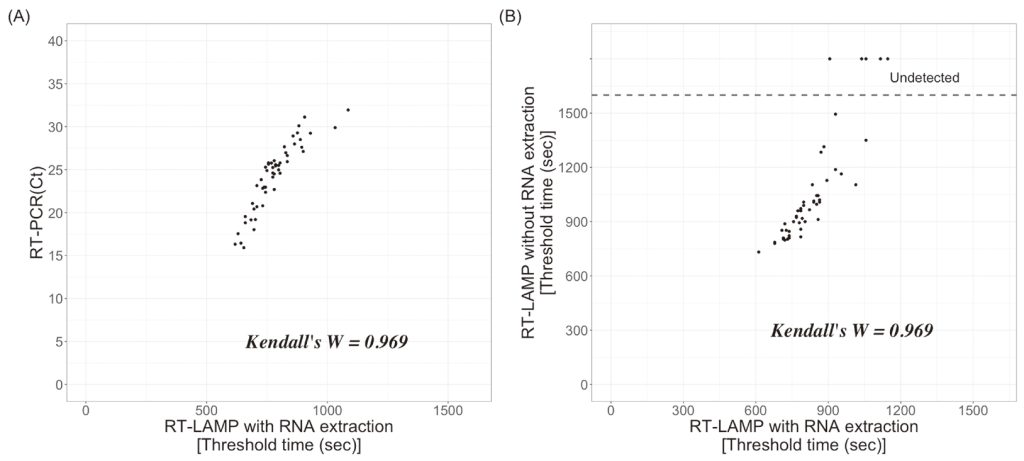
Figure 1 Performance of RT-LAMP using RT-PCR positive saliva specimens with Omicron.
(A) The correlation between the Ct values of RT-PCR and the threshold time values (sec) of RT-LAMP using RNA extracted from the saliva specimens is shown by a scatter plot and Kendall’s coefficient of concordance W for RT-PCR
positive specimens.
(B) The correlation of the threshold time values (sec) between RT-LAMP with and without RNA extraction from saliva specimens is shown by a scatter plot and Kendall’s coefficient of concordance W for RT-PCR positive specimens.
Twice freeze-thaw specimens were used. SARS-CoV-2 was undetectable in 5 specimens by RT-LAMP without RNA
extraction.
IV.Discussion
We recently demonstrated RT-LAMP to be a reliable alternative to RT-PCR albeit in a study conducted prior to the emergence of Omicron 6). In addition, sensitivity of RT-LAMP with target N and E genes was high and specific for Omicron 14). In this study, we chose the RT-PCR and RT-LAMP detection kits that have been used before Omicron without primer changes. First of all, we proved the RT-PCR efficiency to detect Omicron with 51 specimens that were certified Omicron by Sanger sequencing method. Then, we confirmed that all 51 specimens were determined as positive by the RT-LAMP detection kit. Comparing direct and extracted RT-LAMP, the latter method showed a slightly lower detection rate, most likely due to higher concentrations of viral RNA resulting from the extraction method. RT-LAMP has already been implemented in combination with chemiluminescent enzyme immunoassay at Japanese airport quarantines using self-collected saliva specimens, facilitating expeditious processing of international travelers with all tests performed at points of care. Our results demonstrate that Omicron can be effectively detected in saliva using RT-LAMP.
Conflict of interest
Loopamp Real-time Turbidimeter were supplied by Eiken Chemical (Tokyo, Japan).
Funding sources
This study was supported by Japan Agency for Medical Research and Development (AMED) under Grant Number JP 20fk0108471 and 21fk0108489.
ICMJE statement: S. Oguri, S. Iwasaki, K. Murakami, K. Tanaka, K. Hayasaka, S. Fujisawa, S. C. Watanabe, Konno, M. Murakami: Acquisition, analysis, and interpretation of data: T. Inao, I. Yokota: Statistical analysis, writing of the manuscript: T. Teshima: Chief investigator, Conceptualization, writing of the manuscript. All the authors contributed to the writing of the final manuscript and meet the ICMJE authorship criteria.
References
- Karim SSA, Karim QA. Omicron SARS-CoV-2 variant: a new chapter in the COVID-19 pandemic. Lancet 2021; 398(10317): 2126-28.PubMed
- Volz E, Mishra S, Chand M, et al. Assessing transmissibility of SARS-CoV-2 lineage B.1.1.7 in England. Nature 2021; 593(7858): 266-9.PubMed
- Brandal LT, MacDonald E, Veneti L, et al. Outbreak caused by the SARS-CoV-2 Omicron variant in Norway, November to December 2021. Euro Surveill 2021; 26(50): 2101147.Brandal LT, MacDonald E, Veneti L, et al. Outbreak caused by the SARS-CoV-2 Omicron variant in Norway, November to December 2021. Euro Surveill 2021; 26(50): 2101147.PubMed
- Nagura-Ikeda M, Imai K, Tabata S, et al. Clinical evaluation of self-collected saliva by Quantitative Reverse Transcription-PCR(RT-qPCR), direct RT-qPCR, Reverse Transcription-Loop-Mediated Isothermal Amplification, and a rapid antigen test to diagnose COVID-19. J Clin Microbiol 2020; 58(9): e01438-20.PubMed
- Hirotsu Y, Maejima M, Shibusawa M, et al. Comparison of automated SARS-CoV-2 antigen test for COVID-19 infection with quantitative RT-PCR using 313 nasopharyngeal swabs, including from seven serially followed patients. Int J Infect Dis 2020; 99: 397-402.PubMed
- Yokota I, Shane PY, Okada K, et al. A novel strategy for SARS-CoV-2 mass screening with quantitative antigen testing of saliva: a diagnostic accuracy study. Lancet Microbe 2021; 2(8): e397-e404.PubMed
- Wyllie AL, Fournier J, Casanovas-Massana A, et al. Saliva or Nasopharyngeal Swab Specimens for Detection of SARS-CoV-2. N Engl J Med 2020; 383(13): 1283-6.PubMed
- Yokota I, Shane PY, Okada K, et al. Mass Screening of Asymptomatic Persons for Severe Acute Respiratory Syndrome Coronavirus 2 Using Saliva. Clin Infect Dis 2021; 73(3): e559-65.PubMed
- Bastos ML, Perlman-Arrow S, Menzies D, et al. The Sensitivity and Costs of Testing for SARS-CoV-2 Infection With Saliva Versus Nasopharyngeal Swabs : A Systematic Review and Meta-analysis. Ann Intern Med 2021; 174(4): 501-10.PubMed
- Yokota I, Hattori T, Shane PY, et al. Equivalent SARS-CoV-2 viral loads by PCR between nasopharyngeal swab and saliva in symptomatic patients. Sci Rep 2021; 11(1): 4500.PubMed
- Butler-Laporte G, Lawandi A, Schiller I, et al. Comparison of Saliva and Nasopharyngeal Swab Nucleic Acid Amplification Testing for Detection of SARS-CoV-2: A Systematic Review and Meta-analysis. JAMA Intern Med 2021; 181(3): 353-60.PubMed
- Iwasaki S, Fujisawa S, Nakakubo S, et al. Comparison of SARS-CoV-2 detection in nasopharyngeal swab and saliva. J Infect 2020; 81(2): e145-7.PubMed
- Shirato K, Nao N, Katano H, et al. Development of Genetic Diagnostic Methods for Detection for Novel Coronavirus 2019(nCoV-2019) in Japan. Jpn J Infect Dis 2020; 73(4): 304-7.PubMed
- Almeida LT, Gonçalves AB, Franco-Luiz APM, et al. Molecular detection of omicron SARS-CoV-2 variant is achieved by RT-LAMP despite genomic mutations. Mem Inst Oswaldo Cruz 2022; 117: e220050.PubMed